

Studying Abroad at Benguet State University in the Philippines
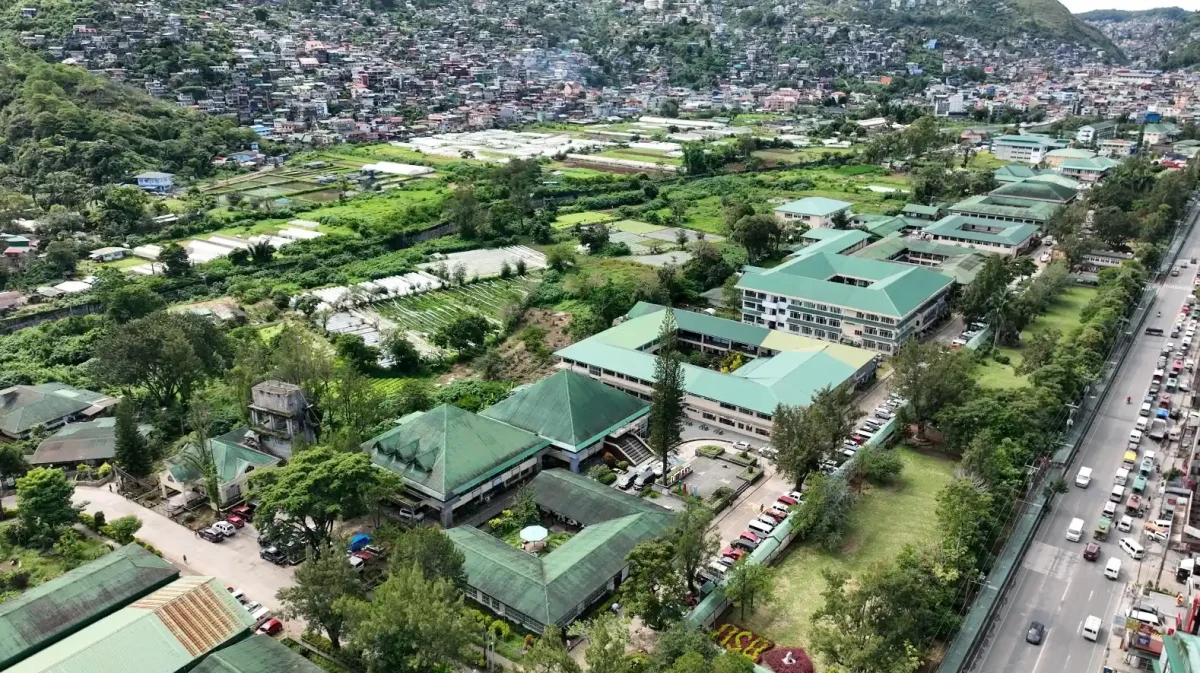
About a five-hour drive north from Manila, the capital of the Philippines, lies Benguet State University, where Sōma Yauchi studies.
Benguet State University was founded in 1916, originally as the La Trinidad Farm School. It began with just 30 students. As enrollment increased and the institution underwent several name changes, it eventually became a state university in 1986.
Today, it is a comprehensive university with a variety of faculties, including Agriculture, Arts and Humanities, Engineering, and many others.
Yauchi had played baseball since childhood, but he was never particularly good at it. Nor did he have any other outstanding talent.
He admired athletes who succeeded overseas. When he watched them, he noticed Japanese interpreters standing beside them. He thought those interpreters looked “cool.”
Although he became interested in English, his grades were near the bottom of his class. Studying alone at a desk was not his strength. When he took university entrance exams in Japan, his English scores were terrible. He entered a Japanese university and began studying regional economics.
During high school, club activities consumed most of his time, leaving little opportunity to focus on English. Once he became a university student and gained more free time, he finally had the chance to study the language seriously.
As he studied English outside of his university coursework, he gradually realized that he was beginning to understand it. Learning became enjoyable. One of his professors was involved in international cooperation activities, and Yauchi came to admire that work as well.
He had more opportunities to talk with international students and listen to English-language music. He wanted to become more fluent. His university offered an exchange-study program, and with studying abroad in mind, he began working hard at English.
To participate in the exchange program, he needed a TOEIC score of 600. TOEIC is an international test designed to measure English communication skills. Rather than determining pass or fail, it evaluates a person’s ability through a numerical score.
When Yauchi first took the TOEIC, he failed to reach 600 points. The application deadline for the study-abroad program was approaching in March 2025. He had to score at least 600 before then.
He took the test again in February 2025. The results would be announced in March.
When he checked his score…
765 points.
Just before the application deadline, he managed to qualify for the program. Scoring 765 on the TOEIC set his life in motion at remarkable speed.
In early March 2025, his TOEIC score of 765 was announced.
He immediately applied for the study-abroad program.
To avoid any mismatch between expectations and reality, he participated in a short-term trial study-abroad program in the Philippines from March 11 to March 23.
After returning briefly to Japan, his official study-abroad in the Philippines was confirmed in early April.
While remaining enrolled at his Japanese university, he began full-scale study in the Philippines in August 2025. At Benguet State University, he majors in English through the university’s English program.
A TOEIC score of 765 is generally considered sufficient for handling everyday and workplace English without major problems. Many Japanese companies would regard such a person as someone who “can use English.”
However, once he arrived in the Philippines, Yauchi found speaking English stressful.
He had entered the country full of confidence, but people could barely understand him.
It felt as if he had mistaken merely being able to float in water for having mastered swimming, then jumped into the deep ocean without knowing what he was doing.
After arriving in the Philippines, he felt that his English ability was at the level of a baby learning to speak.
What would become of Yauchi’s English challenge?
(To be continued in Part 2)

Related Articles